How to Design a Muslim Prayer Room in Your American Home
One of the most meaningful things a Muslim family in America can do for their home is create a dedicated prayer space. It does not need to be a full room. A corner of a bedroom, a quiet end of a living room, or even a hallway niche can become a place where your family returns five times a day, and where guests immediately understand that this home is one in which Allah is remembered.
What follows is a practical, considered guide to building a prayer space that feels intentional, calm, and genuinely yours, wherever you are in the United States.
Step 1: Find the Qibla Direction
Before anything else, establish the direction of the Qibla for your city. In most of the continental United States, the Qibla points northeast toward Mecca. Use a reliable app like Muslim Pro or IslamicFinder to get the exact bearing for your home address. Mark it clearly, because everything else in your prayer space follows from that direction.
Step 2: Choose the Right Space
A dedicated prayer room is ideal, but most American homes do not have a spare room for this purpose. What matters more than size is consistency: a space your family returns to and that stays ready. Good options include a bedroom corner, a converted walk-in closet, a nook at the end of a hallway, or a sectioned-off area of a living room defined by a rug and a piece of wall art.
The key qualities to look for: the floor should be clean and comfortable for sujood, the space should be reasonably quiet, and the wall facing the Qibla should have some visual anchor that helps the mind settle before prayer.
Step 3: The Wall Facing the Qibla
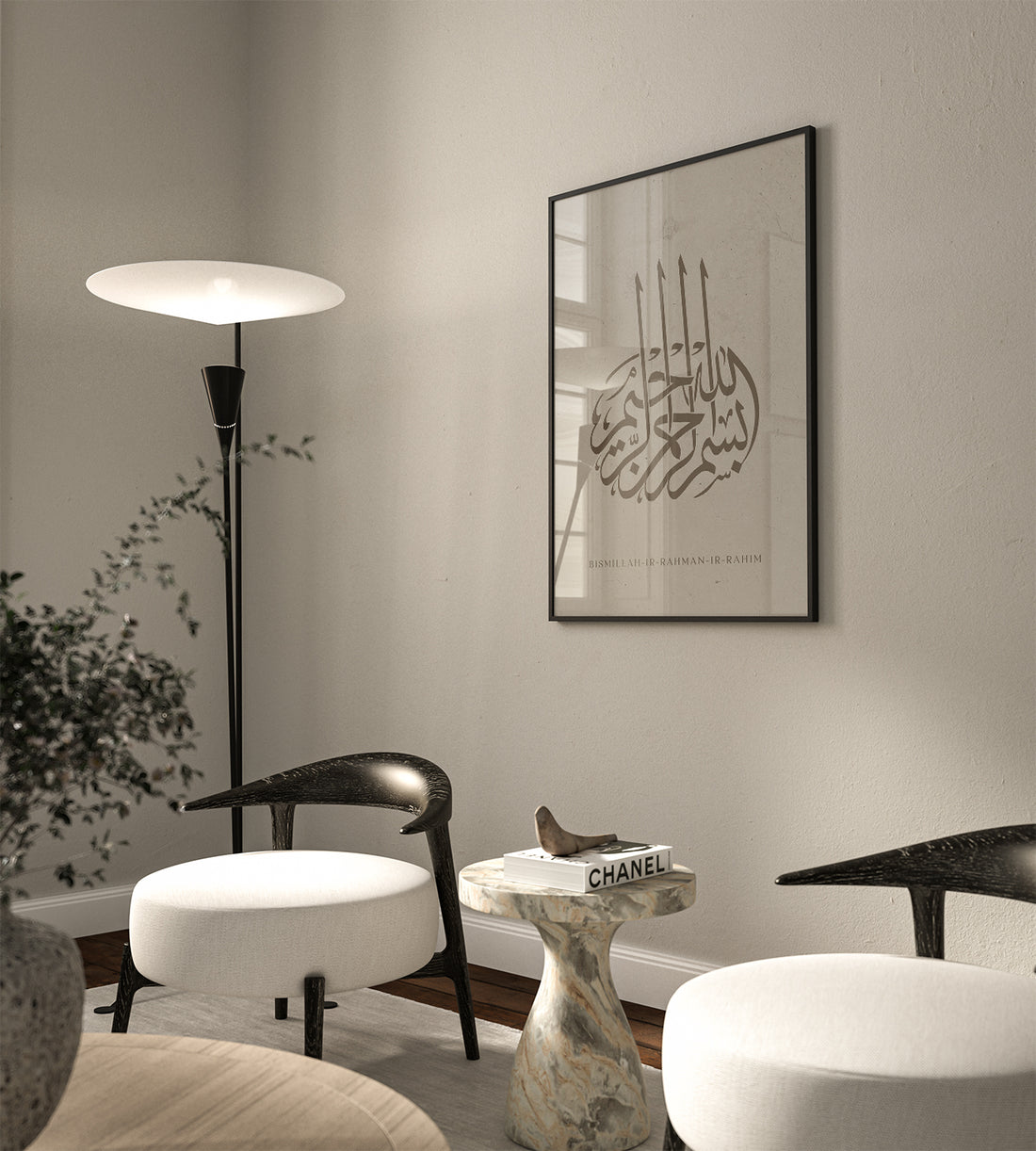
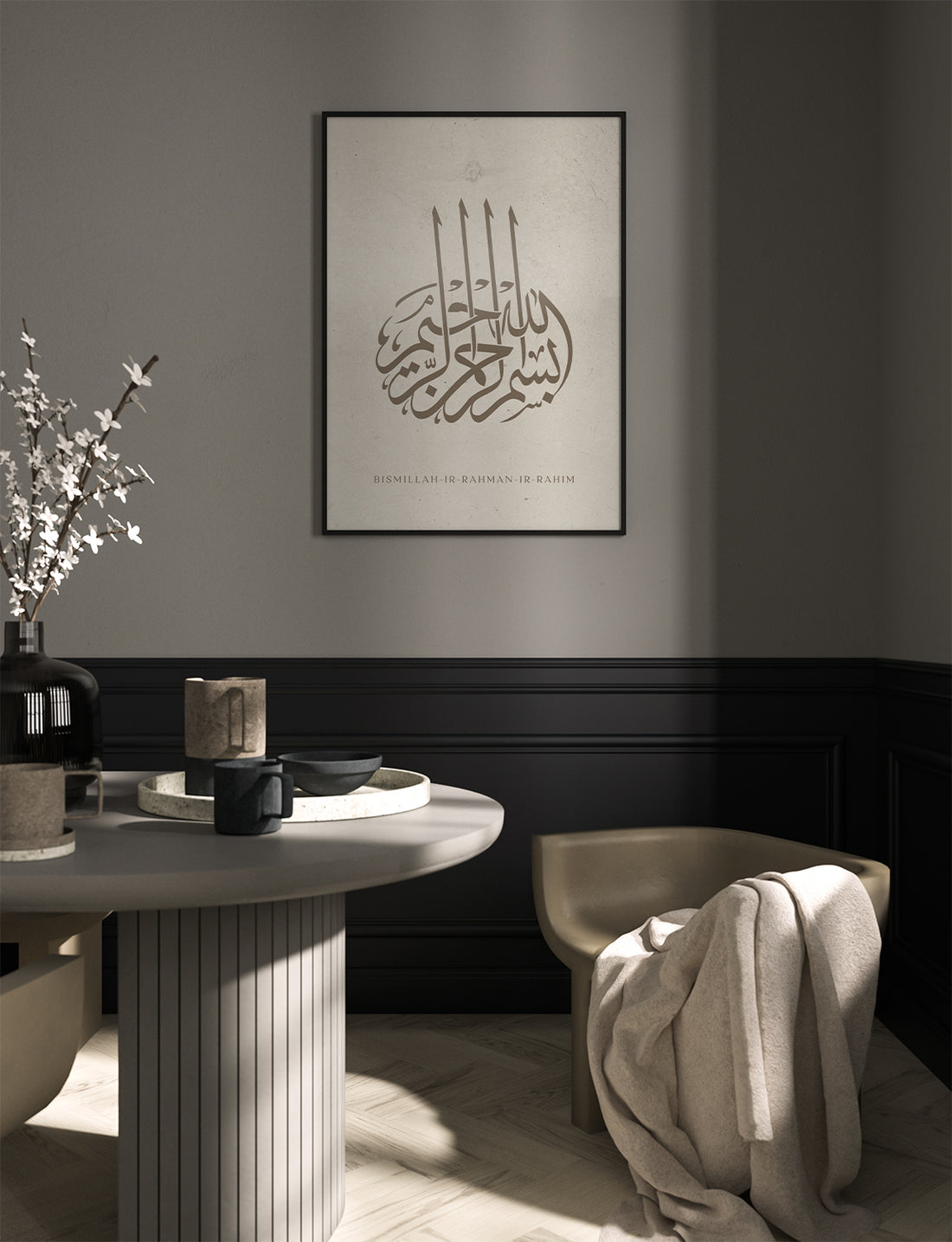
This is where Islamic wall art matters most, and where many people underestimate its effect. A blank wall in front of you during prayer is a missed opportunity. A wall with meaning behind it, a verse you know by heart, a calligraphic reminder of who you are praying to, changes the quality of focus in a prayer.
The two most powerful pieces for a Qibla wall are Ayatul Kursi and the Mihrab.
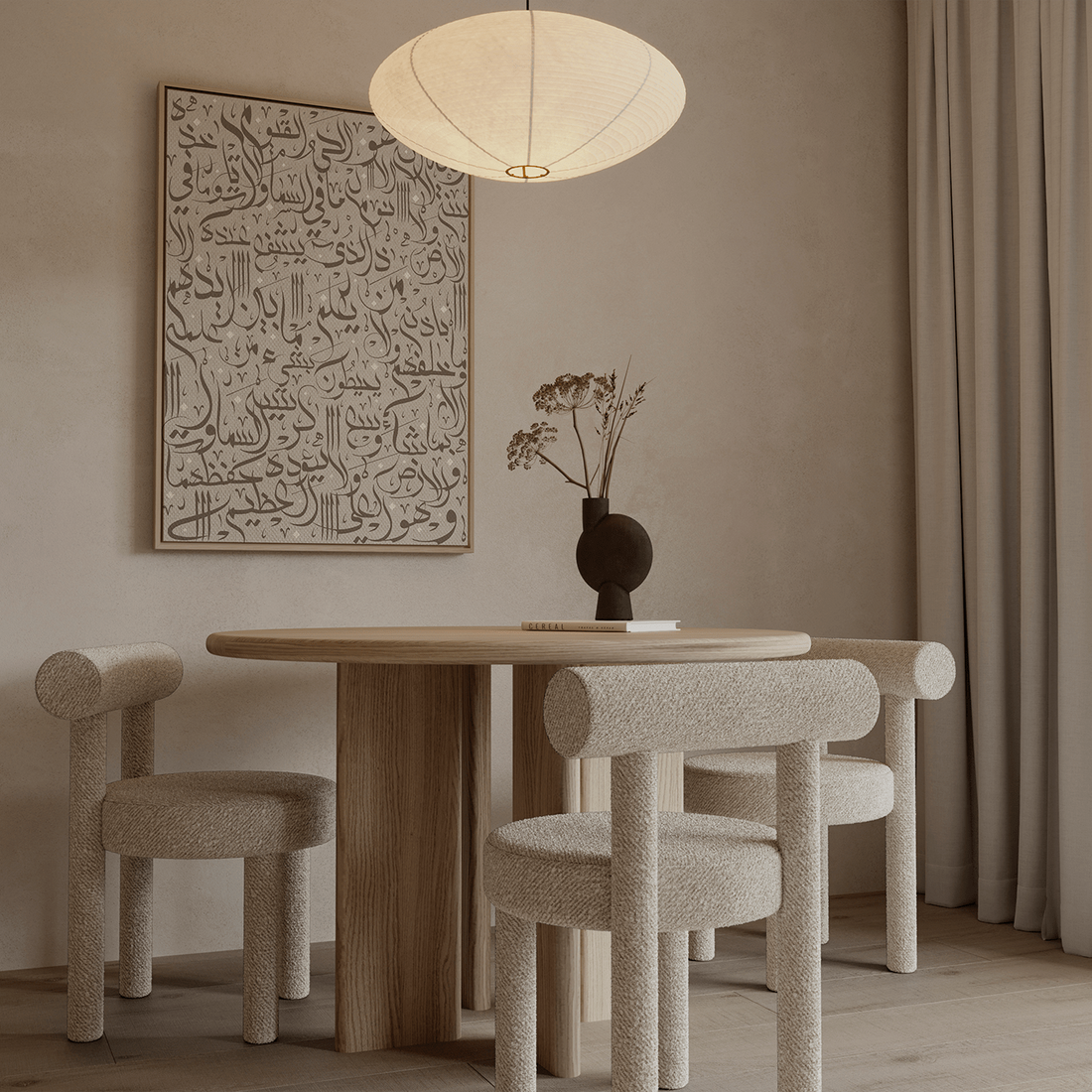
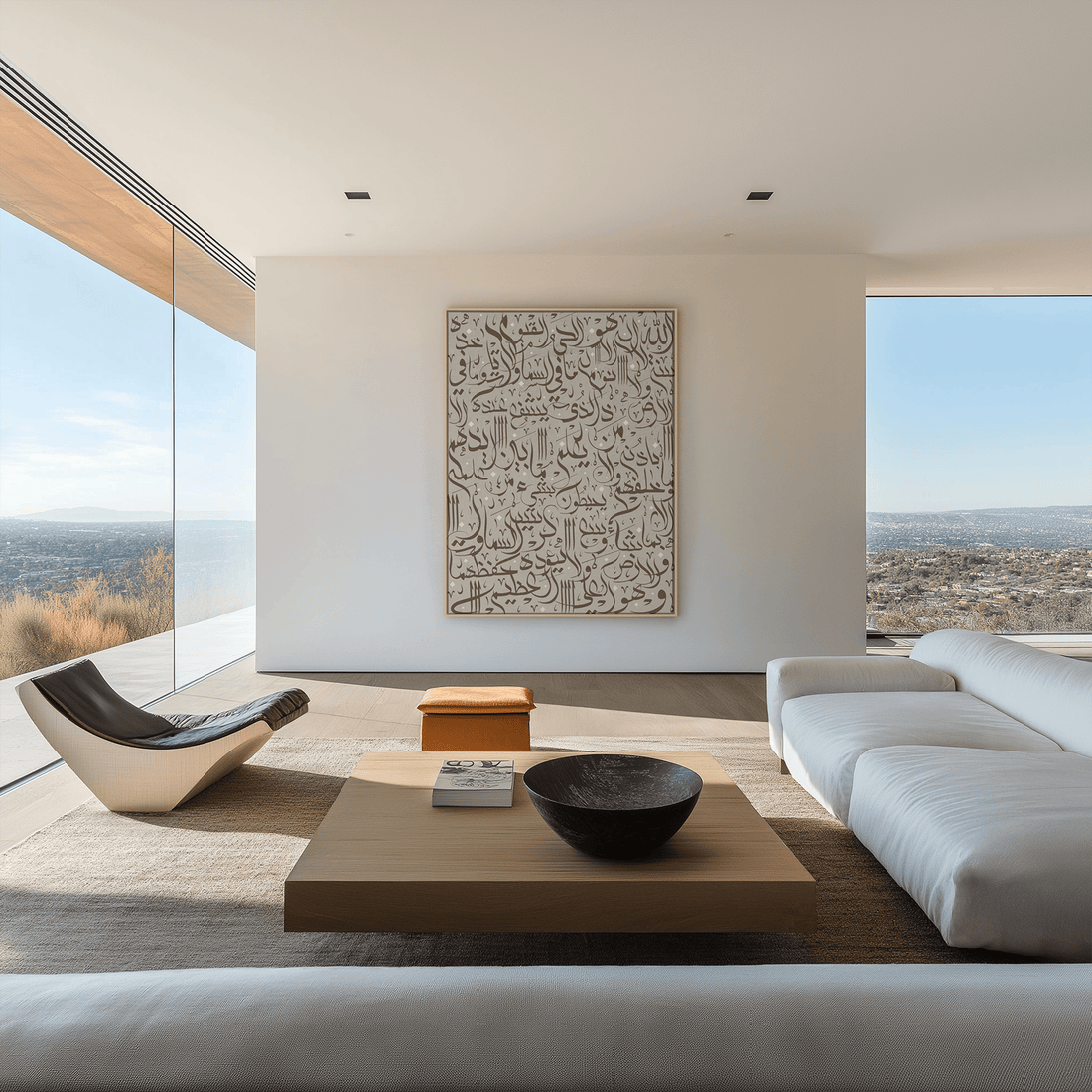
Ayatul Kursi is the verse most Muslim homes in America have on their walls for a reason. It is the Verse of the Throne, a declaration of Allah's eternal presence and guardianship. Our Taupe Limited Edition Ayatul Kursi Framed Canvas is one of our most meaningful pieces: limited to 100 worldwide, printed on 400gsm heavyweight canvas with a museum-quality matte finish, and framed in solid wood.

For wider walls, our Ayatul Kursi Landscape Edition fills the kind of broad wall that portrait canvases leave feeling empty. The calligraphy stretches calmly across the space and anchors the room in a way that feels settled and intentional.
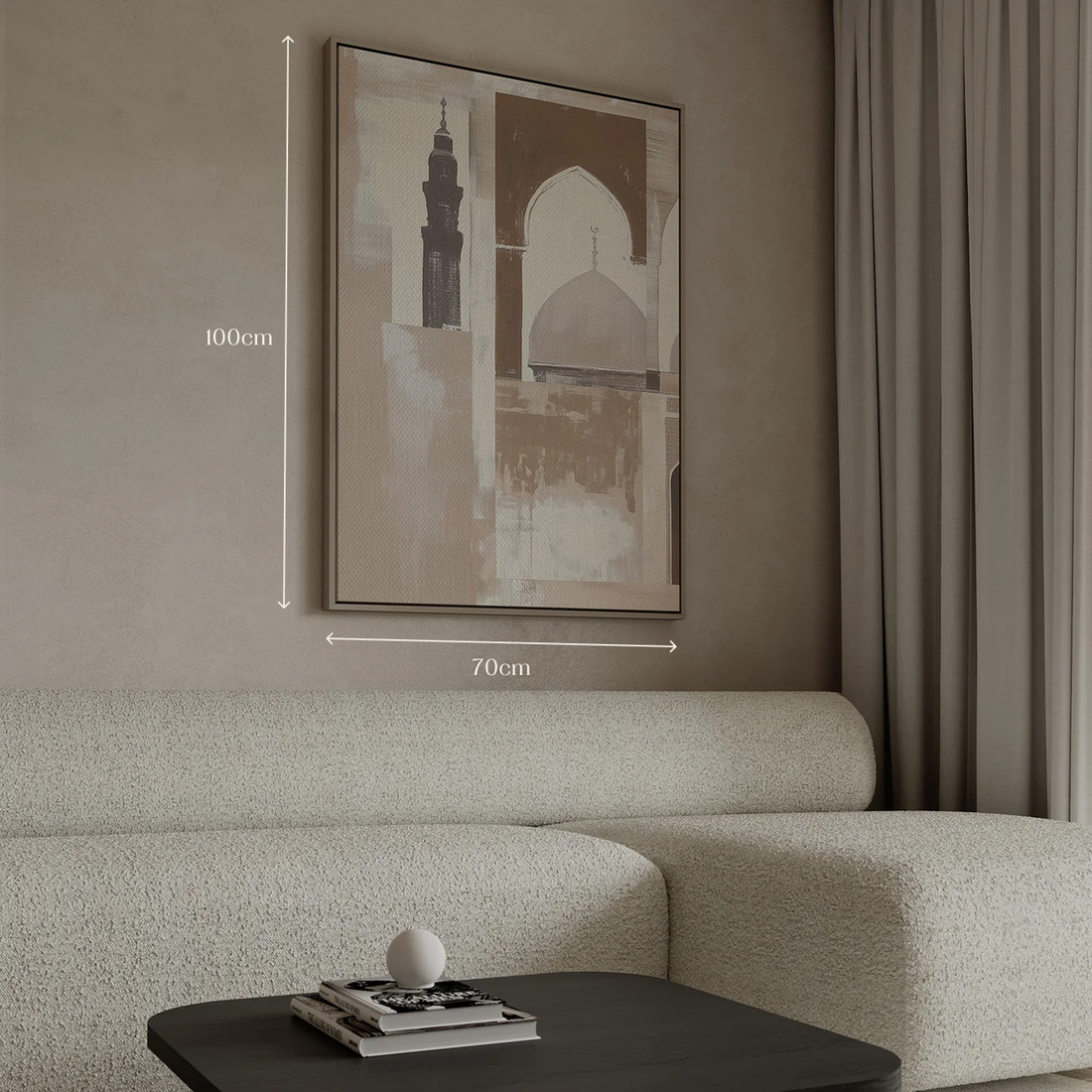
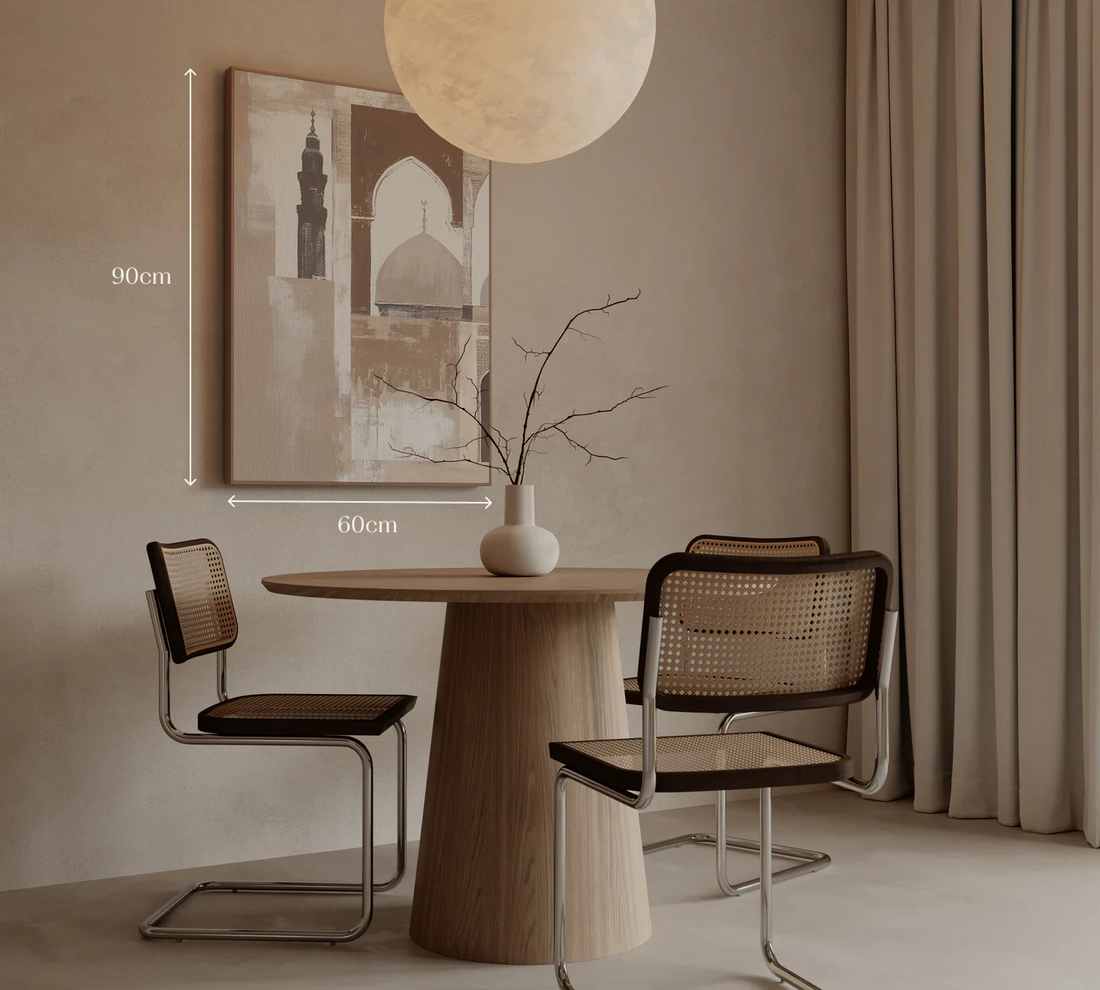
If you want something that evokes the architecture of prayer itself, our Timeless Mihrab Framed Canvas reimagines the prayer niche found in every mosque. Its softly weathered arches bring centuries of Islamic architecture into a home prayer space, turning the wall you face into a quiet pointer toward something higher.

Step 4: The Prayer Mat
Choose a prayer mat that is generous in size, at least large enough for a comfortable sujood without the rug shifting. A mat with a mihrab design at the top helps orient the direction of prayer. Keep it clean and dedicated to prayer use rather than general floor covering, so the space carries a sense of intention even when you are not praying.
Step 5: Additional Wall Space
If your prayer space has side walls or the space flows into a hallway, consider pieces that support the mood rather than dominate it. The 99 Names of Allah are a natural companion to any prayer space. Our 99 Names of Allah Framed Print in Beige gathers all the Asma ul-Husna in elegant calligraphy, bringing a sense of reverence and stillness to a room.
For a hallway or doorway near the prayer space, the Set of 2: Ayatul Kursi and Al-Isra 17:80 frames every entrance with two reminders: protection over the home and the dua for entering and leaving each chapter of life with sincerity.

Step 6: Lighting and Atmosphere
Warm, soft lighting makes a prayer space feel calm rather than clinical. Avoid overhead fluorescent light if you can. A warm-toned lamp, some natural light during the day, and a quiet candle for Fajr and Isha prayers can completely change the feeling of the space. The goal is that walking into it feels different from the rest of the house: slower, quieter, more intentional.
Step 7: Keep It Simple
A prayer space crowded with objects becomes a visual distraction. One or two pieces of art, a clean mat, perhaps a small shelf for a Quran and a tasbih. Everything in the space should earn its place. The most powerful prayer spaces are usually the most minimal: a clean surface, a meaningful wall, and nothing competing for your attention when you face Allah.
A Note on Giving Back
When you choose Neanour art for your prayer space, 10% of every purchase goes directly to Muslim communities in need through our monthly Zakat missions. Your prayer corner does not just hold your own dua. It is connected, Insha'Allah, to something that builds better lives elsewhere.
Browse our full collection of Islamic wall art for Muslim homes in the USA.
With every Neanour piece, 10% goes directly to Muslim communities in need. Your wall brings barakah home and helps build better lives.